
How Recent Storage Tank Failures Could Impact The Future of Environmental Regulations
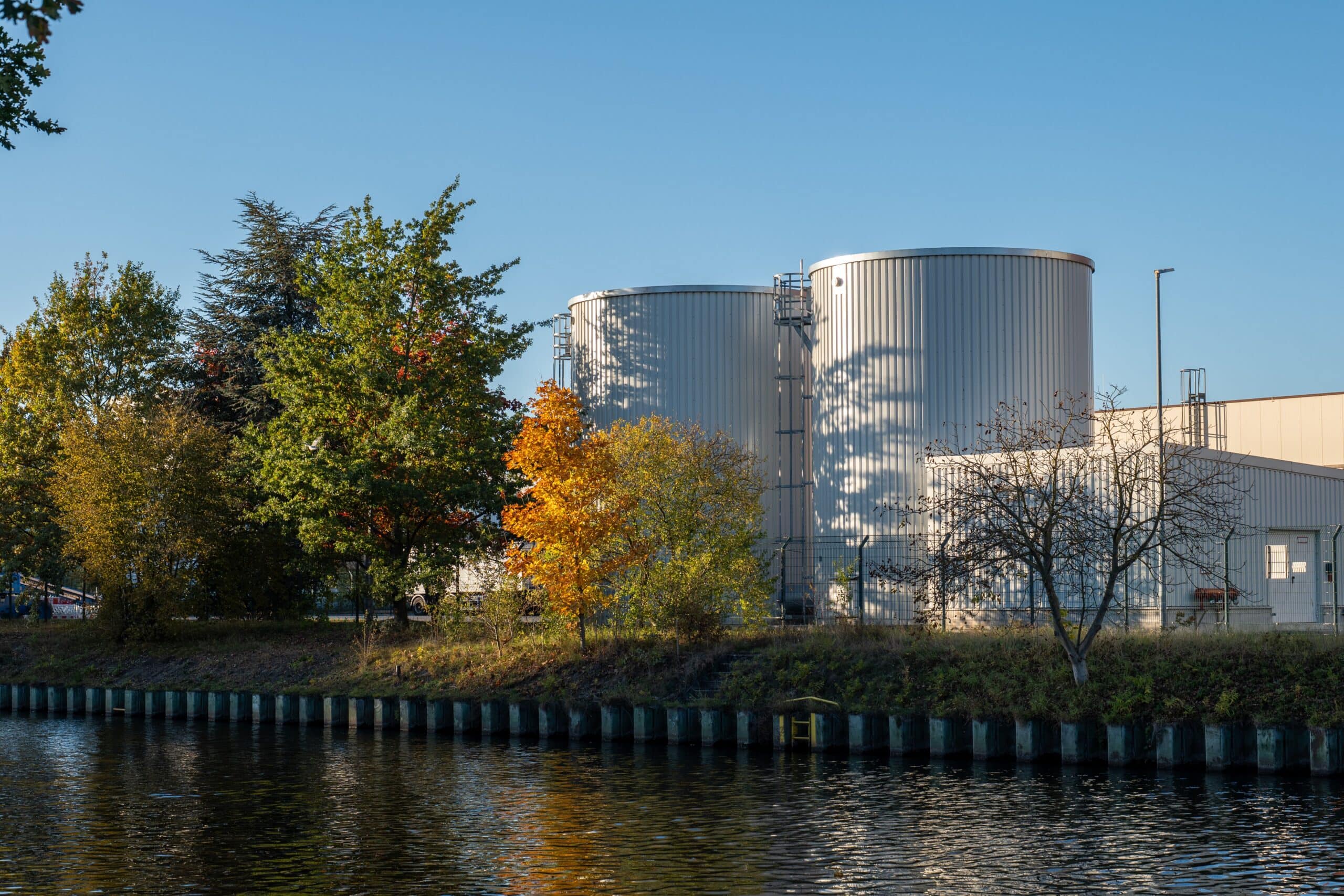
Recent catastrophic events in the United States associated with storage tank failures at two facilities (Nippon Dynawave in Longview, WA; GKN Garden Grove, CA), have heightened awareness for the public, regulatory agencies, and staff working and managing industrial facilities with bulk storage of hazardous substances.
A similar relevant event, which occurred in January 2014, is the Freedom Industries incident in the Charleston, WV area, where a bulk storage tank failure caused the release of hazardous substances into the Elk River (Freedom Industries Charleston WV). This release directly impacted the public drinking water since a primary intake for drinking water was located 1.5 miles downstream from the industrial site. Approximately 300,000 people were left without access to potable water for an extended period. Many of NGE’s employees in our Charleston, WV area office were impacted by this event.
Unlike bulk storage of oil, which is regulated by Spill Prevention, Control, and Countermeasure (SPCC) regulations, the bulk storage of hazardous substances is mostly unregulated by federal and state agencies. There is no federal program currently in place, and only a limited number of state environmental agencies have Aboveground Storage Tank regulations.
Clean Water Act Hazardous Substance Facility Response Plan (HSFRP)
The USEPA’s Clean Water Act (CWA) Hazardous Substance Facility Response Plan (HSFRP) rule will be a step towards the regulation of bulk storage of hazardous substances. The HSFRP rule was finalized in March 2024 with a three-year phase-in period (the timeframe to comply with the initial rule was June 1, 2027) but based on a March 2026 USEPA proposal to review the rule, this compliance timeframe is expected to be delayed to June 1, 2030. The HSFRP rule applies to facilities with specific quantities of CWA hazardous substances (defined at 40 CFR 116.4) located near navigable waters and meeting defined substantial harm criteria. Significant revisions will likely result from the public comment period that ended in May 2026 and should be followed closely by facilities that store hazardous substances.
Risk Management Plans and General Duty Clause
One example of an environmental regulation that was established in response to a global catastrophic environmental release (Bhopal, India, 1984) is the USEPA’s Risk Management Planning (RMP) rule. The RMP rule is intended to improve chemical accident prevention. It requires facilities that have RMP Regulated Substances (defined at 40 CFR 68.130) in quantities exceeding the rule’s threshold levels to develop and implement a Risk Management Plan. The plan must include a hazard assessment, a prevention program, and an emergency response program.
The RMP rule includes an additional provision with broader application, the General Duty Clause (GDC), which requires facilities to identify hazards and design and maintain a safe facility to prevent releases and minimize the consequences of accidental releases. The GDC applies to facilities with RMP Regulated Substances in any quantity OR any other Extremely Hazardous Substance (EHS). USEPA does not provide a specific list of what constitutes an EHS for GDC applicability. Rather, it has been noted that the GDC can apply to virtually ANY chemical that may pose a risk if released. USEPA’s Guidance for Implementation of the GDC further states that an EHS is NOT limited to the list of RMP Regulated Substances nor to the EHSs listed under EPCRA. The GDC was cited by USEPA in at least one of the recent storage tank incidents where the hazardous substance released was not covered by RMP or defined as an EHS in other environmental regulations.
Why Tier II Is More Important Than Ever
Other environmental programs have been under increased scrutiny due to recent incidents, specifically EPCRA Tier II reporting. EPCRA regulations require facilities with hazardous substances to file a Tier II report annually by March 1 to state and local authorities. One of the primary purposes of the Tier II report is to ensure these authorities, who may be called on to assist in the event of a release or emergency, are aware of the types and quantities of hazardous substances at facilities. Inaccuracies in Tier II reports or failure to file a required Tier II report is a compliance violation and can negatively impact emergency response efforts at industrial facilities.
ISO 14001 Updates Expand Emergency Response Planning Requirements
On a global scale and not related to compliance, the April 2026 update to the ISO 14001 standard for Environmental Management Systems (EMS) revised the language regarding the consideration of emergency situations. Certified facilities must now identify potential emergency situations, not just reasonably foreseeable ones, as part of their significant aspects evaluation. Additionally, processes must be established to prepare for and respond to the identified potential emergency situations. While there is a three-year phase-in period to comply with the updated ISO 14001 standard, meeting this requirement regarding potential emergency situations may be challenging, especially given these recent incidents.
What Industrial Facilities Should Do Now
In conclusion, recent tragic events involving the bulk storage of hazardous substances have significantly heightened environmental awareness of these facilities. Although the regulatory implications of these events may not be known for some time, the immediate and long-term impacts on industry, including loss of morale, reduced production, and damage to public perception and relations, can be devastating. Facilities that have bulk storage of hazardous substances should assess their environmental risks and take timely, appropriate action to minimize these risks and avoid potentially catastrophic incidents.
NGE will be providing updates and additional information throughout the remainder of 2026 on the relevant environmental programs mentioned in this article, including the HSFRP, RMP/GDC, Tier II reporting, and the ISO 14001 update.